This feast it is a battle which we wage against the night;
This joy is just a shadow of the resurrection life.
– Andrew Peterson, ‘Remember and proclaim’
Whether you eat or drink or whatever you do, do it all for the glory of God.
– 1 Corinthians 10:31
A few months ago I began the practice of thanking God for each ingredient I was using before I cooked with it. I never made this a rule, as if absently adding milk to my tea were an occasion for self-flagellation. Rather, I think that to be thankful to the Lord in general – to be ‘overflowing with thanksgiving’ – it is necessary to thank Him in the particular too. I want to be thankful, so practising this thankfulness seems good. The breadth of the prayer of General Thanksgiving, which I love (‘all the blessings of this life’), is not useful on its own: it is shorthand. In zooming out to the wood, we mustn’t forget the trees.
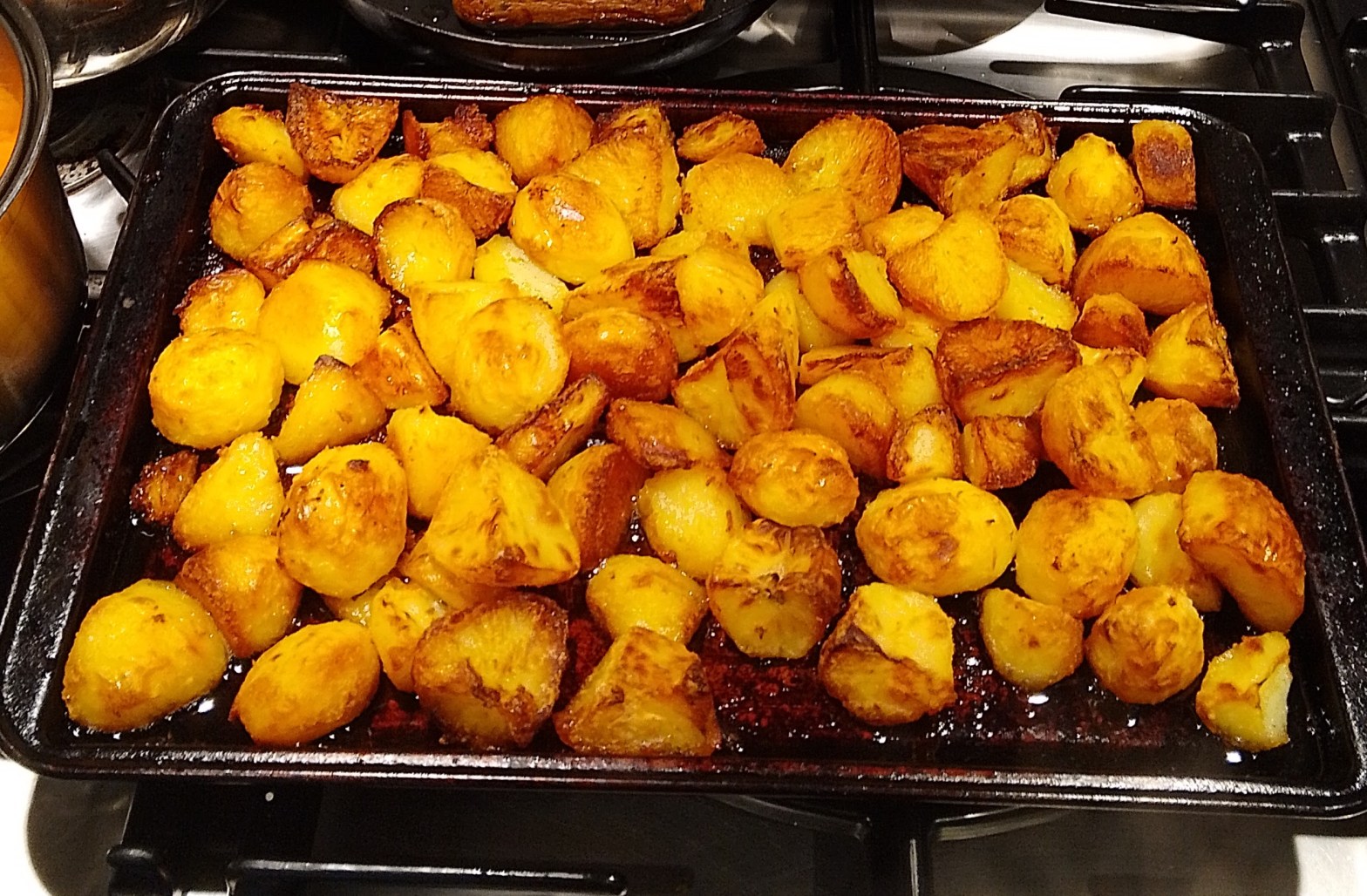
Principled living is good, but it would be foolish to drown the kitchen in legalism. In the current rhythm of my life, cooking is a moment of simplicity and peace which is a real means of grace to me: it feeds me twice. I cook simple things – mashed potato, parsnip soup, pasta with onions and bacon – and my hungry stomach doesn’t despise them. In those moments I am as far as I can get from emails, meetings, and marking: it’s just me, the food, and the Lord.
When I get the opportunity to speak of God’s goodness in public, I often reach for foods to illustrate it: Christmas dinner, porridge, and sour cream and onion pringles are just a few recent examples. Partly this is an attempt to find common ground, but it also expresses something that is deeply true: food is a beautiful and gracious gift from a supremely imaginative and generous Giver. In this respect it is an excellent theology teacher. No surprise then that Scripture is full of food: the garden full of trees that were pleasing to the eye and good for food, the hasty unleavened bread and the slow manna in the desert, the honey in the lion’s carcass, the widow’s bottomless oil and flour, the banqueting hall under a banner of love (refresh me with raisins and apples!), the best of meats and the finest of wine at that great feast, the meals with tax collectors and sinners, the five loaves and two fishes, the daily bread; finally the very flesh and blood of Christ. Food is an intense, fleshly picture of God’s sustaining grace – no wonder we speak of existential ‘hunger’. ‘I’m full,’ we say when we’ve eaten enough. In the short term, we’re right.
Tim Keller writes in Every Good Endeavour that for most of us, work is the primary way we can love our neighbour. Moreover, in others’ work, we can see how they have been instruments of God’s grace and love to us. I owe every mouthful of mashed potato to farmers, distributors, lorry drivers, shelf-stackers, and a virtually innumerable chain of workers in all kinds of industries. My gratitude could end with the free-market mechanism, or the advancing frontiers of agricultural science, or my skills in food preparation(!), but I can also relate all these things to the ingenuity and grace of the one by and for whom all things were created. I wonder more at the Cross than at the dinner plate, but my wondering at the dinner plate is real and true just the same. I can trace the busy finger of Providence in the events that led to my being a Christian in the first place; the same finger feeds me those late evenings when dinner at 5:45 is a distant and tantalising memory.
Evil human schemes and the groaning pains of creation taint food as much as anything else. Shamefully mistreated meat animals, forests devastated for mass-produced palm oil, marginal communities deprived of their staples so they can be sold to western consumers in our fickle faddishness, famine and food poverty worsened by inefficient and corrupt human organisation, ‘beauty’ standards and cultural mores that drive to despair and make grace into misery – all these things (and more) rightly incite our anger. They should make us examine our own participation in these evils, and strive to overcome them. When the Psalmist says, ‘my tears have been my food day and night,’ the implied famine is as tragic as the weeping. But all these will pass. Ours is to wage battle against the night, and to anticipate as we do so the heavenly feast unspoilt by cruelty, greed, famine, impermanence, anxiety, allergy, or shame. Like Mephibosheth, Christians will dine at the King’s table out of an overflow of his kindness. Every earthly meal is a mere foretaste.
Food teaches God’s goodness, it mediates His grace, and it shadows His glorious promises. We are not worthy of it – even in its simplest, dullest forms.
 Yikeiatry